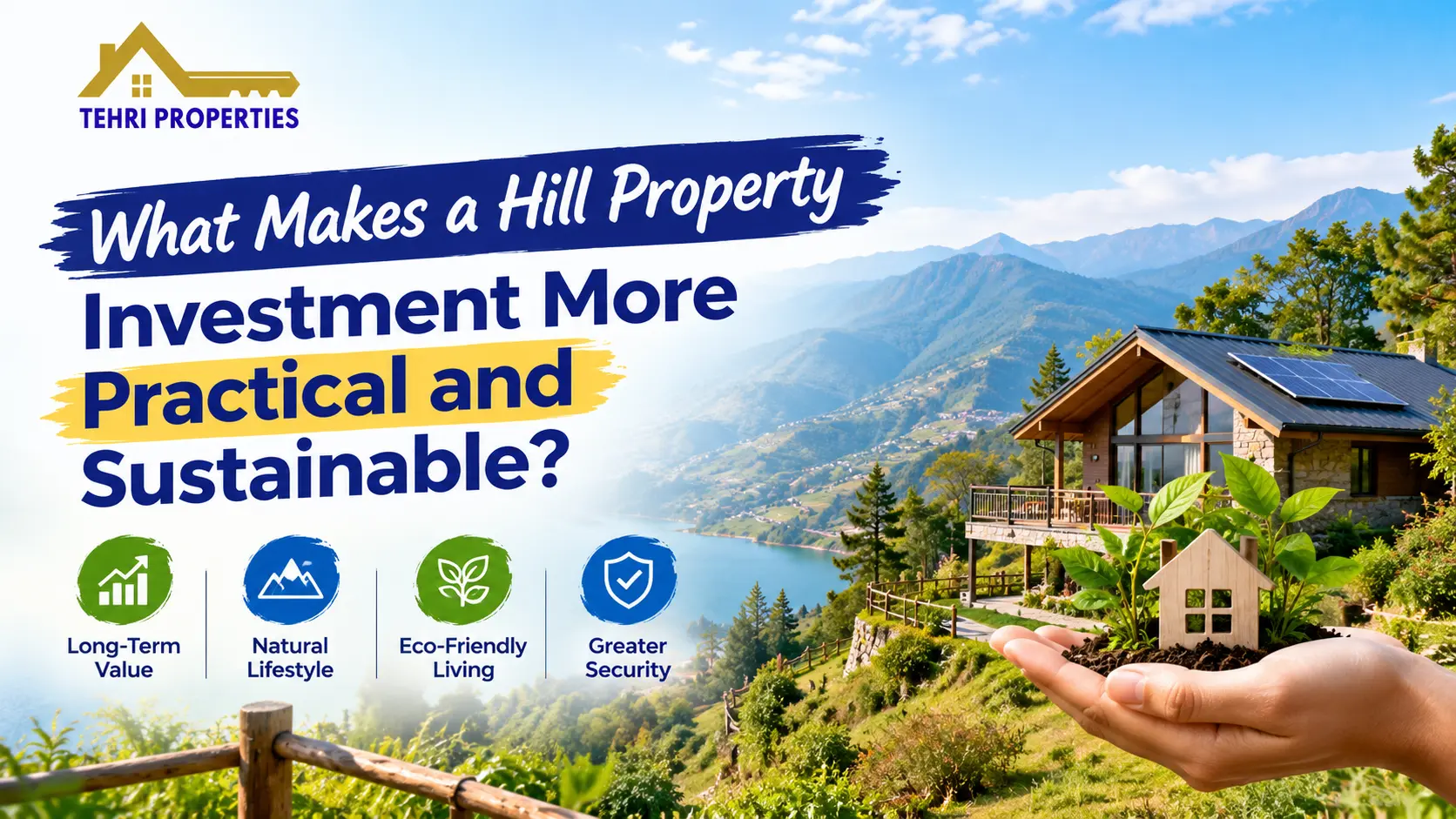
Everyone has a friend who bought a hill plot in a rush, mostly because the view was great and the seller was very persuasive. A couple of years later the road was a problem, the water supply was unreliable, and the paperwork was a mess. A good hill property investment takes more than a nice view. If you are considering Land in Chamba, Uttarakhand, a few practical things matter long before you think about building a cottage.
Here is how to separate a smart purchase from an expensive regret.
Table of Contents
Start With Access: Why Road Connectivity Matters for Land in Chamba
A plot can look perfect and still be a headache if you can’t reach it easily. Before anything else, check the road. Is it motorable all year? Does it get cut off during the monsoon? Who maintains it?
Land in Chamba sits on the Rishikesh–Gangotri route, which makes it far easier to reach than many remote hill locations. Delhi and Dehradun are within a realistic travel range, so weekend visits are possible and don’t need a week of planning. A property you actually visit is one you will actually use, and that is the first test of practicality.
Look at the Last Mile
Highway access is only half the story. Walk the last stretch to the plot yourself. A smooth highway followed by a broken 500-metre track can ruin the whole experience. Reputable sellers like Tehri Properties are upfront about this, and they show you the real approach to a plot instead of just the brochure photo.
Check the Terrain Before You Fall for the View
Hills are beautiful, but not every slope is buildable. Sustainable investment means looking at the ground you are paying for. Steep, unstable, or landslide-prone land costs much more to develop and may never be safe.
Ask about soil quality, drainage, and whether the plot is on stable ground. Gently sloping or terraced land is generally easier and cheaper to build on. When people search for Land in Chamba, the plots that hold their value are usually the ones with sensible terrain, not just the ones with the most dramatic backdrop.
Water and Power Are Not Optional
Water is the most overlooked factor in hill investments. Find out whether there is a natural source nearby, whether a borewell is feasible, and what the electricity situation is. A plot without dependable water is a much harder sell later, whether you plan to build or to resell.
Clean Paperwork Is the Foundation of a Sustainable Purchase
This is where many buyers get burned. Land rules in Uttarakhand have their own specifics, and you should never skip due diligence. Verify ownership history, check for disputes, and confirm the land use is appropriate for what you plan to do with it.
Working with a transparent developer makes this far less stressful. Tehri Properties focuses on clear documentation, so buyers of Land in Chamba aren’t left chasing papers after the money has changed hands. Still, always get a lawyer to review the documents. Trust the process, but verify it.
Think About the Long Game
Ask yourself how you plan to use the land in five or ten years. A weekend retreat, a homestay, a retirement home, or a pure appreciation play each need different things. Be honest about your goal and choose a plot that fits it.
Sustainability Means Building With the Mountain, Not Against It
A sustainable hill investment respects the environment it sits in. Local stone, sloped roofing, proper drainage, and minimal tree cutting keep your costs lower and your property healthier over time. They also keep the area beautiful, which protects the value of everyone’s land.
Buyers of Land in Chamba who build lightly and thoughtfully tend to enjoy lower maintenance, better resilience in heavy rain, and a property that blends in rather than stands out awkwardly. Tehri Properties encourages this kind of mindful development, and it shows in the quality of the communities that grow around their plots.
Keep Your Budget Realistic
Land is only one part of the cost. Include boundary fencing, road access improvements, water arrangements, and construction in your numbers. Hill construction usually costs more than the plains, so a plot that seems cheap can become expensive fast. Planning for this early is what makes an investment practical.
Choose Location Growth Over Hype
Hype fades. Fundamentals stay. Look for areas with improving infrastructure, steady tourism interest, and a real community, not just a trending hashtag. Land in Chamba ticks these boxes for many buyers: it is calmer than crowded hill stations, well connected, and still reasonably priced compared to saturated markets.
Visit Before You Commit
Spend a night there if you can. See the plot in morning fog and in afternoon sun. Talk to locals. Ask the neighbours what the monsoon is like. Tehri Properties is happy to arrange site visits, and that kind of openness is usually a good sign about whoever you are buying from.
Final Thoughts
A practical, sustainable hill investment comes down to a few honest questions. Can you reach it easily? Is the terrain safe? Are the papers clean? Can you build responsibly and afford to maintain it? If the answers are yes, you are looking at something that will serve you for years.
If you are exploring Land in Chamba, speak with the Tehri Properties team, visit the site yourself, and take your time. The right plot is worth waiting for.